Reading may seem like a solitary pleasure, but we do not believe it is so. As we read, we intimately interact with writers, the worlds they create, and our own inner selves as well as the real world that surrounds us. Some of us are also blessed enough to have friends to share the experience with.

While discussing the idyllic village of Three Pines and the captivating characters author Louise Penny created in the Inspector Gamache books, we were aware of the sensory pleasure to be had in the meals described. Olivier’s Bistro, Gabri’s baking, and dinners at the Morrow’s can easily make us salivate while reading the books… Louise Penny's books, are a wonderful entrée into a sensual world, where each book is a season, capturing its mood and flavours, and contributing to the layers of meaning about the characters, who are marvellously revealed over the series.

At one point, a daydream of going through the series with a notebook in hand, writing down all these meals and later cooking them, took shape. This is our "notebook". We hope you enjoy this literary-culinary-sensory-philosophical journey.

Showing posts with label Clara and Peter. Show all posts

Friday, July 22, 2016

Veggies & Herbal Butter... And Speaking Up

by Amy


Clara chopped the ends off the fresh carrots and watched Peter toss the tiny new potatoes into boiling water. They’d have a simple dinner tonight of vegetables from the garden with herbs and sweet butter. It was one of their favorite meals in late summer.

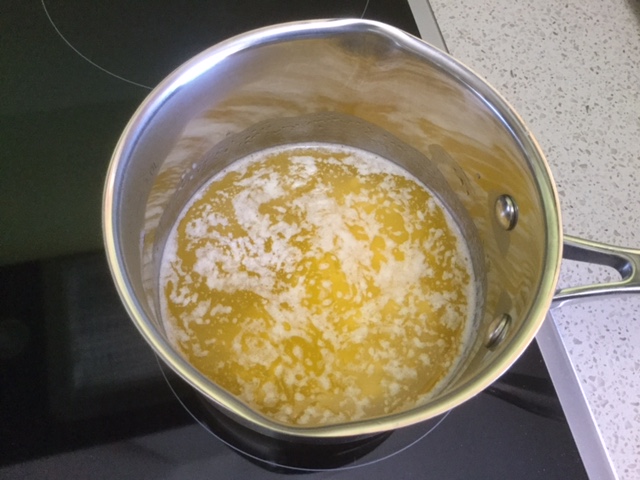
I didn’t really make this meal, did I? I started to… I thought herbs and sweet butter? Maybe I’ll try making herbal butter! I’ll take fresh herbs from the garden and smash them into some melted butter and then smear that on some vegetables… I didn’t really have fresh garden vegetables, though. And I made meat for the husband… and I couldn’t resist adding some tomatoes and carrot slices to the skillet afterwards…  The butter ended up being only for the potatoes and a sprinkle on the broccoli. I did enjoy the flavored butter! I used the leftover butter on some pasta for my son the next day. He loved it.

 “So,” she concluded, her plate almost untouched, “I don’t know what to do about Fortin. Should I go into Montreal and speak to him directly about this, or just let it go?”

I totally felt for Clara here. I think that’s the type of question many of us ask ourselves frequently. When should we make our views known? When should we take a stand? When should we confront someone doing something we disagree with? And when should we just let it go?


Peter took another slice of baguette, soft on the inside with a crispy crust. He smeared the butter to the edges, covering every millimeter, evenly. Methodically.Watching him Clara felt she’d surely scream or explode, or at the very least grab the fucking baguette and toss it until it was a grease stain on the wall.Still Peter smoothed the knife over the bread. Making sure the butter was perfect.

Sometimes it’s hard to decide because some things, while important to us, might not really matter in the long run. Like how butter “should” be spread on a slice of baguette. I’m with Clara. I’m sure some people would agree with Peter. No one is really “right”.

A couple of months ago I saw a Facebook rant (I won’t name names) where someone was very bothered because, when flying, the person on the seat in front of her had leaned the seat back. She was angry and posted about how the flier in the seat in front of her had no common courtesy. I mean, how could he? He’d taken up space that was hers… Hilariously enough, the sheer number of antagonistic comments proved that there were passionate people on both sides of the “to-lean-or-not-to-lean” debate. I had a chuckle and moved on.

A few weeks later, my husband was on a plane to England. As soon as he landed, he sent me a shocked (and infuriated) text saying the man seated behind him had ranted and raved and accused him of being an inconsiderate and uncivilized human being because he’d inclined his airplane seat. My husband is 6’5’’. A 10+ hour flight in the upright position (with the seat in front of him inclined, by the way) wasn’t exactly a comfortable flight. He said the guy was spewing such venom that it wasn’t worth arguing over, though. He was shocked. He was even MORE shocked when he heard that a couple of weeks earlier I’d seen a number of people who agreed with angry upright position passenger.

Sorry for the tangent. The point is, if it’s hard to agree on something like inclining seats… imagine how hard it is to agree on other issues that have more cultural or generational biases?


What should he tell her? To forget it? That what Fortin said wasn’t that bad? Certainly not worth risking her career. Just let it go. Besides, saying something almost certainly wouldn’t change Fortin’s mind about gays, and might just turn him against Clara. And this wasn’t some tiny show Fortin was giving her. This was everything Clara had dreamed of. Every artist dreamed of. Everyone from the art world would be there. Clara’s career would be made.

I can understand Peter’s point. It isn’t like anything Clara will say will actually change Fortin’s mind. We rarely do change anyone’s mind just because we preach our own moral code to them. If ever, really.

But that’s not the point, is it? Why would Clara speak to Fortin? Would it be to change him? Or to not allow him to change her?

Should he tell her to let it go, or tell Clara she had to speak to Fortin? For Gabri and Olivier and all their gay friends. But mostly for herself.

And I think that’s the point. But mostly for herself. It is for herself. Ultimately, she speaks to Fortin not because she’s trying to change his behavior, but because her response (or lack of it) defines her own.

Peter dug the tip of the knife into a hole in the bread to get the butter out.He knew what he wanted to say, but he didn’t know if he’d be saying it for his sake, or for Clara’s.

It’s easy, especially in hindsight, to accuse Peter of self-centeredness and jealousy. I think this is one of his redeeming moments. One of those times where we see the potential for the Peter he eventually becomes. He’s sorely tempted to give an answer to benefit himself. He is incredibly self-aware. I think the first step towards change is awareness. The fact that he acknowledges that his motives may not be the best and holds himself back makes me hopeful for his character.

“Well?” she asked, and heard the impatience in her voice. “Well?” she asked more softly. “What do you think?”

When we decide to speak up, we don’t do it to change the world. At least I don’t think so. When we speak up, we do so in order to take care so the world doesn’t change us. Not that any of us should be immutable. On the contrary, I think growth always involves change. But in which direction? And why? Conformism is dangerously easy. Staying true to yourself and your beliefs isn’t as comfortable. And consciously changing for the better – despite the context and setting – is harder yet.

When we speak up, I don’t think we should expect others to change. We should expect to be challenged, questioned, sometimes ridiculed and confronted. Speaking up should imply a willingness to engage in reflection and debate. It should mean we are sure enough of where we stand that we are ready to defend our point of view, but respectful enough of the other person that we’re willing to listen to their opinion and concede their points. We might even shift our stand, if needed, to accommodate our growing understanding of the issue at hand.

It is not unusual for our discourse to be directed at ourselves. We speak up in order to remind ourselves of what we think and believe and value. We speak up so we do not condone unseemly behavior with our silence.

Peter was right. The likelihood of Fortin changing his opinions or his behavior because an as-yet-unknown artist disagreed with his attitude was slim at best. He was also right in that the reason Clara should speak up was for her own sake.

I frequently tell my son that we cannot change others. We cannot control their behavior. We can only control how we react. It is a valid lesson at any age.

When we talk about setting limits and boundaries, it doesn’t mean controlling what others do. It means establishing what your own limits are and what you will do when someone crosses the line.

Clara couldn’t change Fortin. She couldn’t make him respect Gabri – or anyone else. She could choose and control how she would respond, though.

We cannot demand respect. We cannot demand equality. We cannot demand certain standards of behavior. We cannot demand love. I’m wrong. We can, but that doesn’t mean we’ll get what we ask for. We can determine consequences and make our expectations and beliefs clear. We can establish boundaries and follow through with proper reactions when those boundaries are crossed. We cannot control others, but we can control our own responses. And, in doing so, we can ultimately influence others because we tend to gauge our actions according to expected reactions.

When we speak up we don’t do so to change the world. We do so in an attempt to avoid conformity, to stand our ground so the world doesn’t change us into an unrecognizable version of ourselves. But, in doing so, we become a beacon. Others who think like us are attracted to our stand, to our strength. We influence those around us, slowly and surely. We become an inspiration. When we speak up, we don’t do so to change the world. But, when we speak up, the world changes. A little bit. A drop in the ocean. A little light in the dark. A whisper. It is enough.

Friday, June 3, 2016

Filet Mignon & Blue Cheese Sauce and Random Miscellaneous Musings

by Amy


“He looked at Clara Morrow. She was also in pajamas and a dressing gown and, he glanced down, slippers. Could this be a new, and nightmarish, fashion trend? How long had he slept? While he knew flannel was an aphrodisiac to Anglos, it did nothing for Beauvoir. He’d never, ever worn it and didn’t plan to start.”

I love this scene. I love, love, love their pajama day idea! I think that it is the very definition of a lazy day - even if you get bucket loads of things done. Actually, it’s one of my favorite things about hospital work. Scrubs are as comfortable as pajamas. Doctors (and other healthcare professionals) don’t really wear scrubs here in Brazil unless it’s hospital work that involves operating rooms. Since I work in neonatal care and delivery rooms, I get to wear scrubs when I’m in the hospital. At the office the white coat is more appropriate. I consider scrubs to be glorified pajamas.

 “It’s very relaxing. I stay in them all day.”

“Beauvoir tried to look disapproving but had to admit, she did look comfortable. She completed the look by having bed-head, though that was nothing new. Her hair always stuck out in all directions, probably where she ran her hands through it. And that would also account for the crumbs in there, and the flecks of paint.”

I know. Not the same. But this scene gives me flashbacks to my residency years. Beauvoir was so tired he crashed. Then he wasn’t sure if it was early morning or evening. He wasn’t sure if he wanted breakfast or dinner. The people around him were wearing comfortable – although not very elegant – clothing (what could be worse than scrubs and crocs?). And bed-head? Yeah. Flashbacks.

“He laughed, surprising himself. He’d never had an actual conversation with Clara. With any of them. The Chief had. Somehow he’d managed to become friends with most of them but Beauvoir had never been able to pass through that membrane, to see people as both suspects and human. He’d never wanted to. The idea repulsed him.”


I love Beauvoir. And I love watching him mature through the series. This is a huge milestone. He’s
started to blur the distinction between “them” and “us”. Although the idea still “repulses him” to an extent, he’s already started to see people as human. One of the things I love in The Long Way Home is when Gamache asks him what it is with him and the elderly. He answers that he just treats them like people. This is one of the scenes where he begins to see people as human – even if they are suspects.

“Clara hesitated. She didn’t like the idea of being a spy but if he was right then an innocent man was in prison and a murderer was among them. Almost certainly in the room with them at that moment.”

Clara, on the other hand, had no difficulty in seeing people as human. The hard part here, for her, was seeing them as suspects. In an earlier post we talked about how hard it is to let go of those we love and remember grace when we are constantly made aware of the evil that is in the world (https://thenightisastrawberry.blogspot.com.br/2016/01/chicken-pesto-sandwich-and-letting-go.html). Clara is made uncomfortably aware of the fact that, even in idyllic Three Pines, a murderer was – or is – among them.

I once read an interview in which Louise Penny said she had originally thought Peter and Clara would be amateur sleuths who would assist Gamache. I think this book (BURY YOUR DEAD) has Clara playing that role. She isn’t always discreet. Beauvoir frequently cringes in his interactions with her. But, all in all, he’s both impressed and grateful. And it is in this book that his own bonds of friendship are established with Three Pines. Up until now he'd investigated them. He now befriends them.

 “Myrna and Peter arrived and Beauvoir joined them for a bistrô dinner, ordering the filet mignon with cognac blue cheese sauce. They chatted about various events in the village, the ski conditions at Mont Saitn-Rémy, the Canadiens game the night before.”


I was looking forward to the sauce. I’m not much of a meat eater, but my husband loves filet mignon, so I thought this meal might possibly please us both. I’d eat potatoes and blue cheese sauce. He’d have the filet. In the end, he was happy with the filet. He tolerated the sauce. He ate a couple of potatoes, but preferred rice. My son gags with baked potatoes – even when they’re on the firm side – and can’t stand most sauces. He tried it. But stuck to filet and rice. I thought the sauce was a bit too rich for my tastes, but happily ate potatoes.

So… I think this meal was a bit of a failure. I’m having a hard time writing about it because it wasn’t a particularly enjoyable meal. It was okay. I also consider the presentation to be flawed. But then, I think meat is always kind of ugly. It’s easy to see I’m not a meat lover.  Although I wasn't pleased with it, I must concede that the only thing left over was the sauce. So I guess it was okay.

Part of me wants to start over and try a different recipe. The other part thinks that part of being a non-cook posting about cooking is posting failed attempts – or less than stellar meals. So voilá!

Filet Mignon with Potatoes and Blue Cheese Sauce

Potatoes:
Quarter the potatoes and boil them in water until they’re al dente. Dip in cold water and then flavor with salt, olive oil, rosemary and garlic and bake in oven until “ready”. Mine were on the undercooked side this time.

Filet Mignon:
Season with pepper and garlic and sear on both sides (I used olive oil).


Blue Cheese Sauce:
Melt 1 tablespoon of butter in a pan. Add 1 tablespoon of flour. Whisk in 400ml of milk. Once it’s creamy (or doesn't drip from the spoon), add 60g of blue cheese and some nutmeg. Allow cheese to melt. Sauce is done.

If I were to make this again (and I don’t plan to), I’d bake the potatoes whole, I’d make the filets in strips and add them to the sauce – kind of like a stroganoff. Or serve it on pasta.  


I do recommend we all grow and mature and mellow as did Beauvoir. His choice in meals? Nowhere near my own tastes. 

Friday, May 20, 2016

Poached Salmon - "Not poached like that. Poached as in cooked."

by Amy


There are three poached salmons in the Gamache books

The first is referred to by Gabri as they leave the church on their way to their Christmas celebration in A FATAL GRACE.

“’Olivier’s getting the food from the bistro,’ said Gabri. ‘We made a poached salmon.’”

This is right before they eavesdrop on CC eviscerating her own daughter who had sung, like an angel, only moments before.

“They’d evaded the monster. Instead, it had devoured a frightened child.”

The second is uneaten by Peter Morrow’s cold and frequently hurtful mother in A RULE AGAINST MURDER. They are waiting to be interviewed by the agents after Julia’s murder. No one had much of an appetite; the salmon reminds Clara of Mrs. Morrow’s constant belittling of her daughter-in-law.

“The elderly woman sat on the sofa next to her husband, as though her spine had fused. Clara held out a small plate with a bit of poached salmon, delicate mayonnaise and paper-thin cucumbers and onion in vinegar. One of Peter’s mother’s favorite lunches, she knew, from the times she’d asked for it at their place when all they had to offer was a simple sandwich. Two struggling artists rarely ran to salmon.”

And, finally, in A TRICK OF THE LIGHT, the Morrows invite an eclectic group of people, including neighbors, police agents, artists, art dealers, and AA members to their house for dinner.

“’Are you and your people free for dinner?’ she asked. ‘It’s so miserable we thought we’d poach a salmon and see who can come over.’
‘Isn’t poaching illegal?’ asked Gamache, confused as to why she’d be telling him this.
Clara laughed. ‘Not poached like that. Poached as in cooked.’

Funnily enough, it took three books before Louise Penny included that little joke. It took about two minutes on our Facebook page. The first comment was from someone who – like Gamache – thought it sounded like I was poaching a fish, not poach-cooking a fish.


None of the scenes with poached fish tell us how the characters poached it. As it turns out, I discovered that there’s more than one way to do it. Apparently some people are pretty vehement that their way is the “correct” way. Others are unaware that there even is any other way to do it. Others, like me, made fish in a way that might be considered (by some) to be poaching a fish, but were unaware of the culinary term.

“Great. It’ll be very relaxed. En famille.
Gamache smiled at the French phrase. It was one Reine-Marie often used. It meant “come as you are,” but it meant more than that. She didn’t use it for every relaxed occasion and with every guest. It was reserved for special guests, who were considered family. It was a particular position, a compliment. An intimacy offered.”

Except it wasn’t.


At least I don’t think it was. While I’m sure Clara considers the Chief Inspector to be a personal friend, I doubt all of her guests would qualify as people she considered to be family. It ended up not being a terribly relaxed occasion, what with the undercurrents of artistic envy, competition among art dealers, Peter’s  discomfort with Clara’s success, Castonguay’s belligerent drinking, and Ruth interrogating the agents on their investigation.

All in all, poached fish doesn’t seem to qualify as a comfortable meal for characters in Gamacheland. 
Listening to CC rant would ruin most appetites. Mrs. Morrow is probably the last person I’d choose to spend time with… (She scares me. Ruth is a sweetheart in comparison). CC is pathetic. Mrs. Morrow is mean.  She’s also intelligent enough that her attacks usually hit the mark.


The third poached salmon meal, while not quite comfortable, is the one I’d most like to have been around to help eat. I love gatherings where different people mesh and clash. A TRICK OF THE LIGHT is a book where Louise Penny’s central message is quite evident. In her acknowledgements she wrote:

“Many people were whispering in my ear as I wrote A Trick of the Light. Some still in my life, some now gone but always remembered. I won’t go on at length, except to say I’m deeply grateful I got a chance to write this book. But much more than that, I’m deeply grateful, after many years as a resister, I now completely believe that sometimes drowning men (and women) are saved. And, when coughed back, might even find some measure of peace in a small village. In the sunshine.”

Louise Penny writes about drowning characters. She gives them a chance of redemption. She knows what it’s like. This is an old interview I found when I first read this book and wondered how much was empathy and how much was drawn from some personal experience in redemption. (http://www.quillandquire.com/authors/louise-penny-s-second-chance/)

“And André Castonguay was left all alone.
‘He needs to hit bottom,’ said Suzanne.
‘I’ve hit many bottoms,’ said Gabri. ‘And I find it helps.’”

This book was a study on addiction and the strength of will (as well as loving support and community) necessary to fight it. I found myself remembering much of what Suzanne and the Chief Justice said when reading – in later books – about Beauvoir’s situation.

We don’t get to read about what happens to Castonguay. He gives us a glimpse of what it’s like on the way to rock bottom. Through other characters, Louise Penny treats us to tales of “drowning” people who are saved: Suzanne, Olivier, Beauvoir, Peter…  

We sometimes glimpse Ruth as a woman who is barely afloat. We realize, in The Long Way Home, that she’s Clara’s muse. Part of it is a form of negative inspiration – she’s a template of what Clara doesn’t want to become. She’s a hazard sign warning Clara to stay away from drowning. We see some of her pain (mostly in the latest books). Rosa gives her back parts of her heart. I’m hoping the next book will give her a measure of peace.

One of the (many) things I admire about Louise Penny is her ability to write grace. These books are, among other things, about grace. It isn’t a trick of the light. It is hope. It’s about the lifesavers thrown out to those drowning in self-doubt and despair. It’s about silver linings. It’s about crawling your way back after hitting rock bottom.

I usually bake fish. Sometimes I put it inside an aluminum foil envelope and fill it with citrus slices and white wine and herbs and bake it. When I looked up recipes for poached fish I discovered that some people refer to that method as poaching. Others describe a process of simmering liquid with citrus slices and/or vegetables with or without wine and various other herbs. Some say you simmer it for some minutes, turn it off, and then add the fish. Others say you keep the heat under it and add the fish but don’t let it come to a boil. Some add a rack so the fish won’t really touch the water. In this case it’s “steamed”. Others immerse the fish in the water. Some say you have to skin it first. Others say you leave the skin on and then remove it once you’re done. So many choices!


Thankfully, I’m put at ease by conflicting rules. My theory – in cooking, in motherhood, in my medical practice, and in life – is that harder it is to reach a consensus, the more likely it is that no one really knows for sure and you can kind of figure out what works best for you.

Part of the fun in this blog is trying new things. Since I usually use the baking method, I decided to poach this one in the liquid (although I've learned that the fancy French term is court-bouillon). One of the recipes I saw added fennel. I’d never added it to fish before and loved the idea. Since I had quite a bit in the garden, it was easy to make a generous bed of fennel and parsley for the court-bouillon. I also added lemon, lime and orange slices. I added a clove of garlic, two baby onions – coarsely chopped – and a carrot. I had no celery (which I love), but it’s not so easy to find here and doesn’t taste quite the same. Some recipes mentioned pepper, bay leaves, and dill. I skipped the salt and only added a pinch to my dill sauce. I’ve been kicking myself for forgetting the bay leaves, but I’ll be sure to remember next time. One generous cup of white wine was poured in and then enough water for the liquid to cover the colorful bed of flavors.

I was initially intimidated by the new culinary term (poaching), then felt like I might be in over my head when I read the first recipe that called for a court-bouillon. Now that I actually made it, I realize it’s so easy I feel like it should be taught as basic cooking. It’s easier (much) than scrambling eggs.

I turned on the heat and let the liquid simmer. Only one recipe mentioned that it was “necessary” to remove the skin before poaching. I ignored it since others disagreed and I thought it would be easier to skin the salmon filet afterwards. I was right. I turned the heat off about a minute after adding the fish to the liquid. I placed an orange slice over the fish to keep it immersed. It was done in less than 10 minutes.

This recipe is a winner! Why? It’s easy. It sounds fancier than it is. Cleaning up was quick and easy and the kitchen didn’t smell fishy. That’s the main reason I rarely make fish. I can’t stand the “fishy” smell.

I wish I could have found fresh dill. Fresh dill in Brazil is very, very hard to find, though. So I used dry dill and yogurt with a pinch of salt and a squeeze of lemon.

Perfect.

I think we can all agree that there’s more than one way to poach a salmon. We’ve already had a Facebook poll where some of you shared how you poach/cook fish. I do have another question, though. If you could share a meal with any of the Gamacheland characters… who would you choose?

Saturday, December 12, 2015

Vegetables from the Garden...and Motives

by Libby

Clara chopped the ends off the fresh carrots and watched Peter toss the tiny new potatoes into boiling water. They’d have a simple dinner tonight of vegetables from the garden with herbs and sweet butter. It was one of their favourite meals in late summer. (The Brutal Telling, Kindle p.349)


The striking thing about this meal, apart from the garden vegetables, was the conversation between Clara and Peter. But particularly the one that was playing out in Peter's head. He is deliberating over the possible responses he can give to Clara, after she has sought his advice. And she waits for a response with increasing frustration. In one incisive paragraph we get the idea, and know the feeling!
Peter took another slice of baguette, soft on the inside with a crispy crust. He smeared the butter to the edges, covering every millimetre, evenly. Methodically. Watching him Clara felt she’d surely scream or explode, or at the very least grab the fucking baguette and toss it until it was a grease stain on the wall. (The Brutal Telling, Kindle p.350)
Peter questions his own motives for what he wants to say to Clara. His eventual cryptic response leaves us with little doubt. This was a jaw-dropping passage! 

What should he tell her? To forget it? That what Fortin said wasn’t that bad? Certainly not worth risking her career. Just let it go. Besides, saying something almost certainly wouldn’t change Fortin’s mind about gays, and might just turn him against Clara. And this wasn’t some tiny show Fortin was giving her. This was everything Clara had dreamed of. Every artist dreamed of. Everyone from the art world would be there. Clara’s career would be made. Should he tell her to let it go, or tell Clara she had to speak to Fortin? For Gabri and Olivier and all their gay friends. But mostly for herself. But if she did that Fortin might get angry, might very well cancel her show. 
Peter dug the tip of the knife into a hole in the bread to get the butter out. He knew what he wanted to say, but he didn’t know if he’d be saying it for his sake, or for Clara’s. Well?’ she asked, and heard the impatience in her voice. ‘Well?’ she asked more softly. ‘What do you think?’ ‘What do you think?’ Clara searched his face. ‘I think I should just let it go. If he says it again maybe then I’ll say something. It’s a stressful time for all of us.’ ‘I’m sure you’re right.’ Clara looked down at her uneaten plate. She’d heard the hesitation in Peter’s voice. Still, he wasn’t the one risking everything. (The Brutal Telling, Kindle p.351)

Clara recognises at a moral level exactly what Peter is implying in his, 'I'm sure you're right' response. His duplicitous appeal to her moral sense, can have no other outcome. She does speak with Fortin.

The Brutal Telling leaves no doubt as to the underlying motives for Peter's behaviour. While he 'loves' Clara, he just can't get past himself. He needs to be the successful artist, and he needs Clara to be his emotional prop, his comfort, as he pursues his art. But his artistic expression has reached a dead end while hers is now powerfully blooming. He fears ceding his status as an artist to Clara. He can no longer deny how good she is. Grasping an opportunity to derail her burgeoning career is a measure of this fear, his neediness and dependency, his self-interest. Somewhere in there, though, is a prick of conscience, as he asks himself, 'What have I done?' 

A deep-seated jealously of Clara resides within him. Not only artistically and for the recognition she is now receiving, but also of the intimacy she has with others...something of which he is incapable. Peter is even jealous of Gamache's 'easy relationship with Clara'. The closest he gets to a real intimacy is with his finely detailed paintings behind the closed door of his studio. 'The place he kept his art. The place he kept his heart.'' Now even this is failing him. Welcome to the pathway to dissolution!


Motive is at the heart of every investigation for the Sûreté team. Beyond the facts of a case they look for motive and opportunity. A small patch of soil or an empty pot is all the opportunity I need to plant something. I like to grow what I eat, and take comfort in knowing that I can be right at the source of some of the food that my family eats. Ah, motive and opportunity! The freshness and flavour of organically grown seasonal produce is at the heart of it. There is nothing quite like the flavour and texture of vegetables eaten fresh from the garden. It's not always possible to grow your own, but even having a few pots of herbs is certainly worth considering. The addition of some fresh herbs can elevate a vegetable dish to something quite special.

I love a big platter of young, seasonal vegetables to pick and choose from at a meal. Even young children, who can be finicky (not to mention some adults), are quite happy to hoe into lots of the vegetables on offer in a platter like this! They can be enjoyed just as Clara and Peter did, or to accompany something else like fish, poultry, meat or pulses. I like to have a contrast between leafy greens, root vegetables or tubers, and those from the bush or vine. So at this time of year, early summer where I am, there is quite a range. 

Peter boiled the tiny potatoes but I steamed them until tender, only 20 minutes. A squeeze of fresh lemon juice, tossed in sweet (unsalted) butter and finished with chopped chives and flat leaf parsley, a grind of black pepper is all that is required for deliciousness. I find that the addition of herbs reduces the need for salt, a matter of personal taste though. I always use unsalted butter in my cooking as it allows me to control the seasoning of things.


I prefer to eat and cook young, finger-like carrots, and particularly like the multi-coloured heritage varieties that are available to grow or buy. They always look so festive! I poached them until tender, reduced the liquid to almost nothing, and then finished cooking them with a couple of tablespoons of honey, for a sweet glazing. Finally, a drizzle of extra-virgin olive oil, cracked black pepper and a generous sprinkling of fresh coriander leaves/cilantro (including some of the flowers).


Young fresh beetroot simply roasted are sweet, earthy and delicious. I don't peel them when they are young. I wrapped them in lightly oiled aluminium foil and cooked them for approximately 40 minutes in a 180C/350F oven. A drizzle of red wine vinegar, a tiny splash of extra-virgin olive oil, a grinding of black pepper, and Voila!


Small roasted tomatoes add a wonderful colour and texture contrast, and rich savouriness to the platter. Cut a small cross into the top of each tomato, give it a tiny splash of extra-virgin olive oil, a sprinkle of fresh thyme leaves, sea salt and ground black pepper. Cover the roasting dish with aluminium foil and roast in a 150C/300F oven for 30 minutes, remove the cover and increase the oven temperature to 190C/375F and cook until the tomatoes begin to collapse slightly. Lightly drizzle with balsamic vinegar just as they are removed from the oven.


Zucchini flower ready for pollination. Bzzzz...
 Asparagus, zucchini and peas just go well together! With the addition of spring onions, fresh dill, parsley and garlic they resonate spring and summer. I used snow peas/mangetout, as fresh shelling peas were not available.

Lightly fry the asparagus spears, zucchini slices and peas in a little extra-virgin olive oil and add a dash or two of chicken stock to help the cooking along and prevent the vegetables from sticking.


Fry for several minutes ensuring that the vegetables still have some 'crunch' at the end of cooking.

Just before removing them from the heat add chopped spring onion, fresh dill and 
flat-leaf parsley and one or two crushed and finely chopped garlic cloves. I also added some sliced zucchini flowers. The herbs provide a very complementary burst of flavour with the vegetables. Finish with a drizzle of extra-virgin olive oil and a grind of black pepper.
 

One of my favourite ways to eat spinach and other leafy greens is to cook them the way I first  experienced them in northern Italy. Finely chop a generous bunch of leaves (including the stems) and slowly braise in some water or chicken stock until very soft and tender, and rich in flavour. Alternatively you can braise the whole leaves and then finely chop them. I used spinach, young beetroot leaves, radicchio and sorrel from the garden.

At the end of cooking when the liquid has been reduced right down, stir through fresh finely chopped garlic to taste, and some extra-virgin olive oil and a little black pepper so that you have a dense mound of greens. So good!!


Even though some 'uncomfortable truths' exist between them, Clara has little reason to doubt Peter's motives in responding to her request for advice. Why would she? She believes he is very loyal. She trusts him. A new agent to the Sûreté team, on the other hand, and rather ironically, is bound to wonder at a colleague's motives.
He’d looked at her then, trying to figure out what her motives might be. Everyone had them, he knew. Some were driven by kindness, some not. And he’d been at the Sûreté long enough to know that most in the famous police force weren’t guided by a desire to be nice. It was brutally competitive, and nowhere more so than the scramble to get into homicide. The most prestigious posting. And the chance to work with Chief Inspector Gamache. He was barely in, and barely hanging on. One wrong move and he’d slide right out the door, and be forgotten in an instant. He wasn’t going to let that happen. And he knew, instinctively, this was a pivotal moment. Was Agent Lacoste sincere? (The Brutal Telling, Kindle p.156)
Of course she was! Her motives are not malevolent. Lacoste views Agent Morin as her 'protégé', mentoring him, just as Gamache first mentored her. And Morin's sense of trust in her is not misplaced, as he takes her advice.

Louise Penny introduces us to the young, 'gangly and awkward', and inexperienced Agent Paul Morin in The Brutal Telling. We are given a window into his character through his thoughts and actions and the observations and opinions of the Sûreté team. We feel for him and his uncertainties and fears of being inept, in a caring and sometimes amused sort of way.
So far so good, thought Morin. Seems the idiot agent act is working. Now if only it wasn’t an act. (The Brutal Telling, Kindle p.181)
While he always looks a bit 'clueless', he is determined, and proves his value by learning to watch, listen, research diligently and learn from the team. Gradually through the investigative processes, as his impressions and opinions are sought, he understands that the team is investing in him as a colleague. Even Beauvoir had 'quite warmed to the young man'. 

And how satisfying to discover that Morin is something of a revelation. Our hearts open further to him.
Agent Morin had changed. His loose-limbed awkward body contorted perfectly for the violin, as though created and designed for this purpose. To play. To produce this music. His eyes were closed and he looked the way Gamache felt. Filled with joy. Rapture even. Such was the power of this music. This instrument. ... The violin might be a masterpiece, but Agent Paul Morin certainly was. (The Brutal Telling, Kindle p.294)
And for me, having revisited the series, there is a poignant foreshadowing of what tragically lies ahead.
‘That was foolish of you,’ said Gamache. He looked stern and his voice was without warmth. Morin instantly reddened. ‘Never, ever wander on your own into the woods, do you understand? You might have been lost.’ ‘But you’d find me, wouldn’t you?’ (The Brutal Telling, Kindle p.226)
I like to think he is not forgotten.


To complete the dinner I served fish with the vegetable platter and baguettes.


It's always important to consider the balance of protein in a meal. I gently poached some Atlantic salmon cutlets and made a mousseline sauce, which is a very light, lemon-tangy accompaniment to the fish. It's a very versatile hollandaise-based sauce that works beautifully with vegetables or fish. A bit of lightly whipped cream added to the sauce base contributes to its lightness. It's worth getting to know this sauce.

Mousseline sauce
200g/7oz unsalted butter, chopped
2 egg yolks, at room temperature
40ml/1.4fl oz water
2 tablespoons fresh lemon juice, strained
pinch of salt and white pepper
1/3 cup of pure cream, lightly whipped

1.  Clarify the unsalted butter, by melting it on a low heat and cooking until the milk solids separate off to the bottom of the saucepan. Skim the surface and set aside.

2.  Hand whisk the egg yolks and water in a bowl over a pot of simmering water. Keep whisking (it takes a while) until the mixture has a thick, creamy consistency.

3.  Gradually whisk in the clarified butter, a drizzle at a time until completely absorbed. Gently fold in the lemon juice and salt and pepper. Serve warm. Pour over the fish and sprinkle with chopped chives.